How to make plastic chair?
2025-02-01 15:07 China Haijiang
How Are Plastic Chairs Made? A Super Simple Guide to the Production Process
I. Figure Out What Kind of Plastic Chair You Want
The first step in making a plastic chair is to get clear on what you actually want. Are you looking for a lightweight outdoor folding chair, or a sturdy dining chair for home use? The size, shape, and color of the chair all need to be decided in advance. For example, if you're making chairs for a restaurant, you might want ones that can be stacked to save space. If it's for kids, then a cute design with bright colors would be a good idea.
II. Choose the Right Materials
The main material for a plastic chair is plastic pellets. There are many types of plastic available, with polypropylene (PP) and polyethylene (PE) being the most commonly used. Polypropylene is harder and more suitable for making sturdy chairs, while polyethylene is softer and might provide a more comfortable seating experience. In addition to plastic pellets, you'll also need to add a few other things:
- Stabilizers: These act like "preservatives" for the plastic, preventing it from degrading when exposed to high temperatures.
- Pigments: Want your chairs to come in a variety of colors? Pigments can do the trick. For example, adding titanium dioxide can turn the chair white.
- Fillers: Sometimes, to cut costs, calcium carbonate is added. This makes the plastic more "substantial" without compromising the overall quality of the chair.
III. The "Magic" of Turning Materials into a Chair
1. Melting the Plastic Pellets
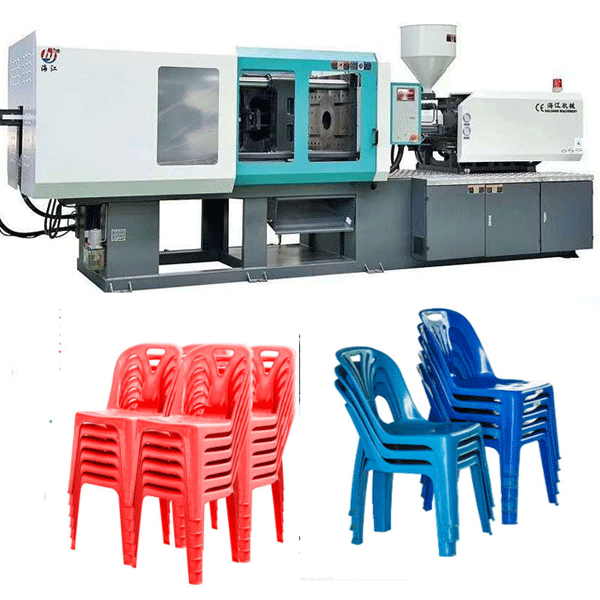
First, mix the plastic pellets with the various additives and then pour them into the hopper of an injection molding machine. Inside the machine, there's a heated barrel where the plastic pellets are warmed to 170–200°C, turning them into a gooey, molten state. At this point, the plastic becomes as fluid as hot chocolate.
2. Injecting the Molten Plastic into the Mold
Next comes the most critical step. The machine's screw pushes the molten plastic into the mold at extremely high pressure (80–120 MPa). The mold is what gives the chair its shape—it's designed to match the exact form of the chair you want. Once the plastic is inside the mold, it starts to cool and harden, gradually taking on the shape of the mold and eventually forming a complete chair.
3. Cooling, Ejecting, and the Chair Is "Born"
After a short while, usually 30 seconds to 1 minute, the plastic cools and hardens. The mold then opens, and ejector pins push the chair out. The newly-formed chair might still be a bit warm, but it's now a fully-shaped piece of furniture. However, it's important to inspect it at this stage. Look for any imperfections, such as excess plastic edges ("flash") or areas that haven't filled properly.
IV. "Shaping" and "Checking Up" on the Chair
1. "Shaping" the Chair
The chair that comes straight out of the mold might be a bit "rough." For instance, there might be excess plastic edges that need to be trimmed off with scissors or specialized machinery. If the surface of the chair is a bit rough, it can also be sanded down to make it smooth.
2. "Checking Up" on the Chair
Once the chair is made, it needs a thorough inspection. Check the dimensions to make sure they're correct, test the stability by sitting on it, and ensure the chair legs aren't wobbly. If any issues are found, such as uneven chair legs, they need to be fixed promptly. Otherwise, the chair won't be comfortable to sit on.
V. Packaging and Getting Ready to "Ship Out"
After the chair has been made and inspected without any issues, it's time to package it. Usually, chairs are wrapped in cardboard boxes or plastic bags to protect them during transportation. When packaging, it's also important to consider how the chairs are arranged. If there are any sharp edges on the chairs, they should be separated with foam or soft paper to prevent them from damaging each other.
VI. Common Issues You Might Encounter in Production
1. Bubbles on the Chair
Sometimes, air bubbles can form in the plastic inside the mold, leaving the surface of the chair looking uneven and pockmarked. This could be due to air trapped in the plastic or insufficient venting in the mold. The solution is to add more vent holes or adjust the pressure during injection molding.
2. Deformed Chairs
If the chair doesn't cool evenly, it might become deformed. For example, the chair legs might bend, or the back of the chair might warp. In this case, you need to check the cooling system of the mold to ensure that all parts cool uniformly.
3. Uneven Color on the Chair
If the pigment isn't mixed well, or if the plastic flow during injection molding is uneven, the color of the chair might be inconsistent, with some areas darker and others lighter. The solution is to mix the materials more thoroughly during the mixing stage or adjust the parameters of the injection molding machine.
VII. Safety and Environmental Protection Are Important Too
When producing plastic chairs, safety and environmental protection must not be overlooked.
1. Safety
- Machine Safety: Injection molding machines are large and powerful pieces of equipment. Operators must be trained to handle them safely.
- Personal Protection: Operators should wear gloves and safety goggles to protect themselves from burns caused by hot plastic or injuries from the machinery.
2. Environmental Protection
- Exhaust Gas Treatment: When plastic is heated, it releases certain gases that need to be properly managed to prevent air pollution. Installing filtration devices can help remove harmful gases.
- Waste Recycling: During production, there may be some waste plastic, such as leftover plastic scraps. Instead of discarding them, these can be recycled and reused, which is both environmentally friendly and cost-effective.
VIII. In Conclusion
Producing plastic chairs might seem complicated at first, but as long as you follow the steps and pay attention to each stage, you can make beautiful and functional chairs. From design and material selection to injection molding, quality inspection, and packaging, every step is important. This simple guide should help you understand how plastic chairs are made. If you're interested in making plastic chairs yourself, this information could come in handy!


CHINA HAIJIANG

whatsapp:8618658255281
wechat:haijiamc
Wechat
Scan Code